
As parents, one of the most important and enduring roles we play is being our child’s strongest advocate. It often begins quietly – maybe you notice your child struggling to keep up with written work, dreading school projects or feeling unusually anxious before tests. You may be told, “They’ll catch up,” or “They just need to try harder.” But deep down, you know there’s more to the story.
Let’s explore why listening to that instinct matters and how small steps can make a lasting difference.
When Something Feels Off
As parents, we often know when something isn’t quite clicking for our child – but we may not always know what it means or what to do next. Sometimes, a child who avoids reading aloud may not just be shy – they might be struggling with dyslexia, which can make it difficult to process letters and sounds. Others may find it hard to copy from the board, organise their thoughts while writing or keep up with their peers in math – these can be indicators of specific learning difficulties like dysgraphia or dyscalculia.
At times, a child’s struggles aren’t with reading or math specifically, but with things like planning, organising, staying focused or managing time – the executive functioning skills. These are like the brain’s ‘management tools’ that help us follow instructions, start and finish tasks, shift attention when needed and regulate emotions. Trouble with executive functioning skills, referred to as executive dysfunction, could be linked to mental health conditions such as Anxiety, Depression, Trauma as well as with Neurodevelopmental Disorders like Attention-Deficit/Hyperactivity Disorder (ADHD), Autism Spectrum Disorder (ASD) and Learning Disabilities. For children with executive functioning difficulties, the school day can feel overwhelming – they might forget to bring homework, struggle to pack their bag or get easily distracted and lose track of time. This isn’t laziness or carelessness; their brain simply needs more support in building these skills.
What looks like lethargy, irritability, mood swings or trouble focusing in teenagers, can actually be stemming from something as basic, and often overlooked, as an iron or a calcium deficiency. A disrupted sleep routine or sudden disinterest in daily tasks may not be defiance, but a sign that the body or mind is calling for support.
As parents and educators, it’s essential to pause when we see recurring behavioural shifts. Instead of reacting with blame or frustration, we need to gently probe: Could this be a health issue? An emotional overload? Or perhaps a sign of a learning difficulty?
Let’s remember – we are not on opposite sides of a battlefield. We’re on the same team, working to understand and support a child’s evolving world.
Stories That Could Be Anyone’s
Imagine a bright curious learner, navigating ADHD and anxiety. During exams, though well-prepared, they would get overwhelmed – distracted by the tapping pens, shuffling feet, whispered voices, ticking clocks or even the presence of others would pull their focus away and add to pressure. It isn’t a lack of understanding but the environment that can make them feel out of place. With accommodations like extra time and a quieter room, the shift can be powerful – not only in academic outcomes, but also in confidence and self-belief. What changes isn’t just the setting – it is the message that their way of learning matters. Such approaches make them feel seen. They begin to trust themselves again.
In another instance, a child using corrective glasses with high power might be getting confused while reading math problems. An observant teacher can help identify patterns in the errors, in this case, visual challenges with symbols. With simple accommodations like a magnifying aid, the child can begin engaging more comfortably with the subject. The change goes beyond accuracy – it reinforces dignity and access.
Then, there can be a child who excels academically, deeply engages with learning, yet often walks out of exams feeling incomplete. For example, a child identified as twice-exceptional (2e) could be gifted with high intellectual ability, but with slower processing speed which may make timed assessments challenging. They know what to write but always feel the pressure of running out of time. When they voice the need for extra time, the initial responses are usually filled with doubt – “You’re already doing so well. Is this really required?” But looking at it from the child’s perspective shifts the narrative, “I want my efforts to show. I just want to feel satisfied with what I’m able to express.” The question here is not about academic success – it is about self-worth and fairness. This moves the focus from ‘marks’ to ‘meaning’. The change may not be dramatic, but it is deeply meaningful for the child. The student walks into exams with more calm and walks out with a sense of completeness – not because every answer was perfect, but because there was enough time to say what needed to be said. Advocacy isn’t only about correcting a struggle. Sometimes, it’s also about supporting a strength – and allowing it to shine without restriction.
These stories are not about granting exceptions. They’re about the quiet advocacy that so many learners and families undertake. They remind us that inclusion isn’t about giving anyone an edge – it’s about removing barriers so that strengths can shine and dignity is preserved.
Diagnosis Is Not a Label – It’s a Lens
When a child’s behaviour seems different from what’s typically expected, it doesn’t mean that something is ‘wrong’ – but it is a signal worth paying attention to. These can be subtle clues to how a child might be processing their world differently. And when there’s a consistent pattern, it’s important not to dismiss it. Whether the cause is physiological or psychological, a qualified medical or mental health professional can help bring clarity and guide the way forward.
Supporting students with diagnosed challenges requires a multi-pronged, individualised approach that addresses their cognitive, emotional and social needs. Effective interventions often include special education support, such as individualised education plans (IEPs) or accommodations in classroom instruction and assessment. Remedial sessions targeting specific skill deficits like reading, writing or math, can be beneficial, along with occupational therapy, speech-language therapy and behavioural interventions where needed. Counselling and emotional support help students build resilience, self-confidence and coping strategies. In some cases, medication may be prescribed by professionals to manage symptoms (e.g., ADHD). Collaborative involvement of teachers, parents, school counsellors and medical and mental health professionals ensures consistency and reinforcement across settings. Most importantly, a strengths-based, inclusive approach that fosters understanding, empathy and adaptability creates a safe environment for every child to thrive.
A diagnosis isn’t a label – it’s a pathway to understanding. It allows educators and parents to work together and support the child meaningfully. With the right strategies and early intervention, every child has the potential to grow – both academically and emotionally.
What If Others Judge?
Many parents worry:
“Will my child be labelled?”
“Will this follow them forever?”
These are very real and valid concerns. As parents, we want to protect our children, not just from struggle, but also from judgement. Here’s something very important to remember – how we, as caregivers, perceive a challenge often shapes how our children and even the world view it.
If a diagnosis is seen as a flaw or something to be hidden, the child may grow up believing their differences are something to be ashamed of. But if we treat it as a tool for understanding how we can offer support, make adjustments and help them thrive – it becomes empowering. It tells the child: “You don’t have to struggle silently. You deserve support. And this doesn’t define your worth – it just helps us understand your path better.”
A diagnosis is not a limitation – it’s an invitation to create bridges where gaps exist. It can help plug in right strategies, accommodations and compassion at the right time, instead of leaving the child to navigate confusion and self-doubt alone. Instead of asking, “What if others judge?”, how about we focus on, “What does my child need to feel seen, supported and confident?”
When we lead with courage and acceptance, our children learn to do the same. In fact, choosing to support your child isn’t just a personal decision – it’s a social responsibility. When we speak up, seek help and advocate for our children, we also help others see that support and understanding can change lives. That’s how we begin to dismantle stigma, one brave compassionate step at a time.
Your Child’s Rights Under Indian Law
Under the Rights of Persons with Disabilities Act, 2016, schools and boards of examination are required to provide accommodations for children with:
- Physical disability
- Locomotor disability
- Visual impairment
- Hearing impairment
- Speech and language disability
- Intellectual disability
- Specific learning disabilities (dyslexia, dysgraphia, dyscalculia, dyspraxia)
- Autism Spectrum Disorder
- Mental behaviour (disorders of thinking, mood, perception, orientation or memory)
- Disability caused due to –
- Chronic neurological conditions
- Blood disorder
- Multiple Disabilities
Education boards in India, such as CBSE, CISCE (ICSE & ISC), NIOS, and various State Boards, have established clear and supportive policies for students who require adjustments in their learning and assessment processes. With appropriate documentation from registered professionals, students can avail these accommodations not only during regular school assessments but also for high-stakes board examinations like those in Grades 10 and 12. Parents and caregivers can stay informed through the official websites of their child’s education board and maintain regular communication with the school’s counsellor or special educator to ensure that the support process is timely, smooth and in the best interest of the child.
What Are Educational Accommodations?
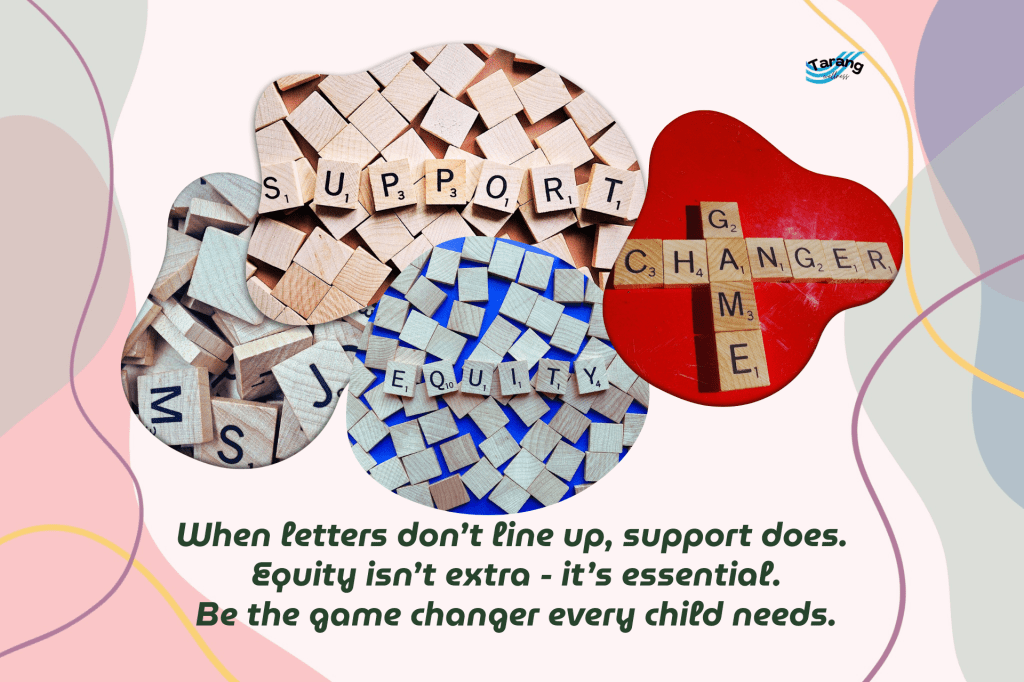
Requesting accommodations isn’t about lowering the bar. It’s about removing unnecessary barriers so children can truly demonstrate what they know and who they are. Whether it’s extra time in exams, shorter assignments, the use of assistive tools or a more flexible routine, these accommodations are about equity – not advantage.
Some examples of accommodations include:
- Extra time during exams
- Access to a reader, writer or prompter
- Special seating or quiet rooms
- Exemption from second language (Class 10)
- Use of assistive tools (like magnifying glass or typing software)
- Non-penalisation for spelling/grammar in language-based learning disorders
The accommodations are granted by the board of examination on a case to case basis. These adjustments reflect a child’s learning – not their limitations.
Turning Advocacy Into Affirmation
When you advocate, you’re not asking for shortcuts – you’re creating stepping stones. You’re helping your child experience dignity in learning, even if they learn differently. You’re helping them find confidence, not just in what they know, but in who they are.
Support is not a crutch – it’s a bridge. With patience, planning and compassion, we can help every child rediscover joy in learning, a sense of belonging and a deep pride in their unique journey. And in doing so, we teach them something powerful: Being understood is not a privilege – it’s a right. And they are never alone in claiming it. Their parents and educators are with them at every step on the way.
 Tarang Wellness