
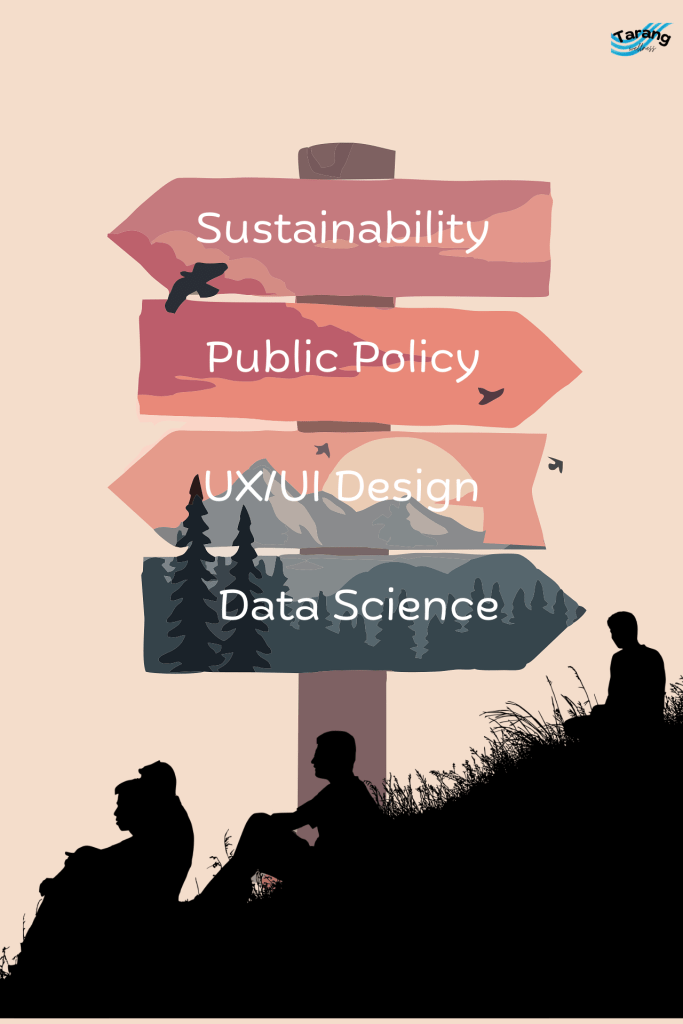
Teenagers entering senior school years are faced with a seemingly momentous choice – which subjects will they choose? These subject choices are portrayed as being utterly life changing, with the power to make or break a student’s future academic and professional prospects.
12-18 years is a period of forming a sense of self and identity. Described by Erikson as the fifth psychosocial stage, this is the time for exploring independence, developing a sense of self and a feeling of control. Those who do not receive a conducive environment which encourages the development of a sense of identity, may develop feelings of insecurity, confusion and self-doubt. Therefore, how important decisions related to a young person’s life are arrived at, plays a significant role in the development of a strong sense of self and identity.
Often, well-meaning adults pose a question to young people – what do you want to be when you grow up? It may appear to be a harmless question for the adult, through which they mean to show an interest and involvement in the young person’s life. However, it can be very scary and intimidating for a young person. Isn’t it equivalent to asking someone to predict their future? In a way this question also implies that they have to be a different person than who they currently are.
With the intention to provide guidance and motivation, family members as well as educators describe to young people how in their time they made their choice of stream or subjects. Their stories often revolve around their parents, teachers, elders and circumstances deciding their choices for them. This line of conversation normalises the lack of agency on part of the young person, giving more importance to the influences of experiences of elders.
While it is enriching to hear accounts of past journeys, technological development, increased global interconnections and shifts in societal structures lead to rapid changes in the opportunities available to each new generation, as well as the challenges they must contend with. What worked in the past was tailored to a different economic, technological and social reality. Success in today’s and the upcoming times would require increased adaptability, lifelong learning and upskilling and a willingness to explore new evolving career paths rather than following earlier roadmaps. In today’s world, an interdisciplinary approach to academic engagement is crucial for aligning with modern career and job requirements, fostering adaptability, innovation, and problem-solving across diverse fields.
Academic proficiency is important; but on its own it can only take you so far. Originality of thought, critical thinking ability, problem solving attitude, creativity and adaptability in approach are important life skills which contribute towards a young person’s holistic development. Life skills can’t really be taught in a classroom. They can only be experienced, practised, and internalised through real-life situations, challenges, and interactions. True learning happens when individuals navigate uncertainty, make decisions, adapt to change, reflect on what did not go as planned and build resilience.
Choosing subjects to study is one such significant real-life situation, which offers possibilities as well as uncertainties. Encouraging young people to reflect on what truly gives them fulfilment, rather than what is expected of them, leads to more authentic choices. When they take the driver’s seat in shaping their future, they explore paths with curiosity and purpose rather than under compulsion.
Deciding subject choices for senior school or course selection for colleges – both provide an excellent opportunity to young people for self-exploration:
- What do you find exciting and engaging?
- Is there something you’re truly passionate about?
- Are there any areas you do not wish to engage with at this time?
- What are your natural strengths?
- Do your interests align with your current skill sets?
- Are there areas you feel you need to work on to pursue your interests?
Self-reflection fosters genuine self-acceptance, allowing individuals to understand themselves on their own terms rather than relying on external validation. The second stage is to objectively review the choices made.
- Have you explored different options before deciding?
- Are you making this choice for yourself, or to meet someone else’s expectations?
- Are you comfortable with the reasons behind your decision?
- Does this choice make you feel confident and motivated?
Once the teenagers have thought through their reasons for their choices, they can be encouraged to visualise the long-term perspective and personal fulfilment.
- What kind of work environment do you see yourself thriving in?
- Do you understand the challenges and rewards of your chosen path?
- Are you open to learning and evolving as your interests grow?
- Can you distinguish between needs and wants?
- What does success mean to you?
- Are you happy with what you’re working toward?
If we truly want the next generation to build meaningful futures, we must give them the space to explore, experiment, and learn from their experiences, without the fear of making mistakes. Growth comes from reflection, adaptability, and self-awareness, not from rigidly following a predefined path.
Let’s change the way we talk about higher education and careers. Let’s listen more, guide gently, and empower young minds to shape their own futures – one informed choice at a time.
 Tarang Wellness